

Is your car acting like it’s breathing through a straw? A failing catalytic converter doesn't just trigger a dashboard light; it changes how your vehicle drives. Replacing this part is an expensive repair, often costing between $1,000 and $2,500. The real tragedy is when a driver installs a fresh unit on a 2014 Ford F-150 or a high-mileage Honda Accord, only for the Check Engine light to return 300 miles later because the root cause was ignored.
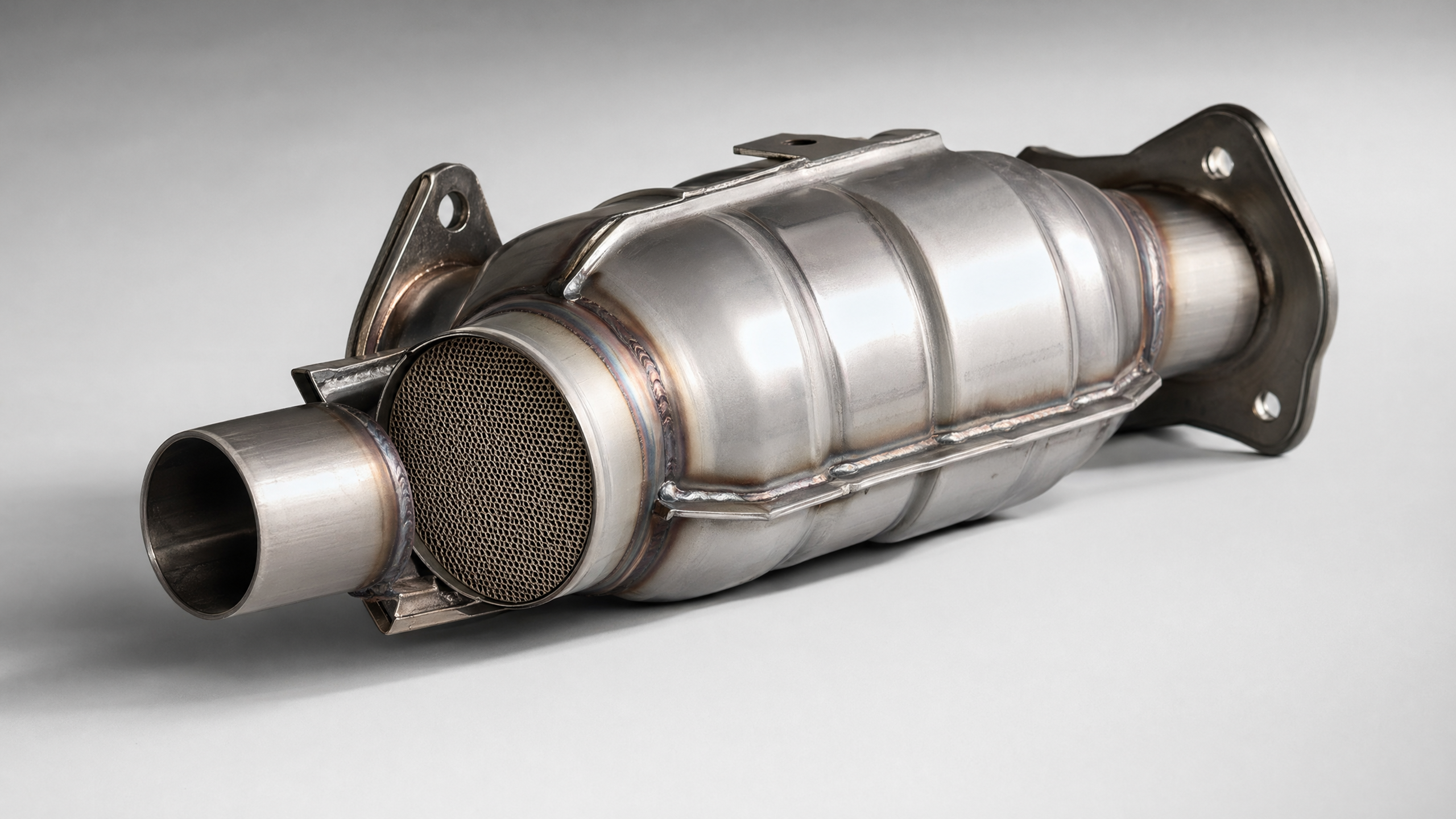
Common Red Flags: The Symptoms
Before diving into the data, watch for these physical signs of failure:
- The Rotten Egg Smell: A strong sulfur odor indicates the internal ceramic catalyst has melted or failed.
- Loss of Power: Sluggish acceleration often means the exhaust flow is physically choked by a collapsed core.
- Rattling Noises: A sound like marbles in a can confirms internal substrate failure.
- Heat Discoloration: Blue or purple shell color indicates extreme overheating from engine-side issues.
The Exhaust Diagnostic Logic Loop
Step 0: DIY Readiness & Major Repair Risk Audit
- Green Light: External bolt-on replacements using standard tools and safe lifting equipment.
- Red Alert: Engine-level work requiring hoists, lifts, or internal disassembly.
Step 1: Systemic Exclusion (Root Cause Check)
- PCV System: Oil vapor contamination can poison the catalyst.
- EGR & EVAP: Excess heat or rich mixture conditions can overload the system.
- Misfire Condition: Never install a new converter with active P0300–P0304 codes.
Step 2: DTC Analysis (Electronic Proof)
- P0420 / P0430: Core catalyst efficiency failure codes.
- P0130 / P0138: Oxygen sensor issues that may mimic converter failure.
Step 3: Sensory Verification
- Smell Test: Sulfur odor confirms overheating or internal damage.
- Sound Check: Ticking suggests exhaust leak; humming suggests flex pipe damage.
Step 4: Visual Physical Evidence
- Heat Damage: Blue/purple coloration indicates extreme thermal stress.
- Carbon Trails: Black soot around flanges indicates exhaust leakage.
Step 5: Final SKU Selection
- Standard Replacement: For isolated efficiency failure.
- Full Assembly: For structural exhaust damage.
- Repair First Strategy: Fix upstream PCV or misfire before replacement.
Compliance: EPA vs CARB
- CARB States: Require EO-certified converters.
- Federal Regions: EPA-standard units are acceptable.
Engine Layout Considerations
V6 and V8 engines have dual banks requiring precise identification. Inline-4 engines often integrate the converter into the manifold, increasing installation complexity. Always verify Year-Make-Model compatibility before purchase.